A practical guide to wallpaper and wall preparation
A little product knowledge helps a conversation go further. Start with the kind of paper, the wall it will meet, and the way the pattern is meant to line up.
A pattern’s repeat and scale are worth checking before the first cut.
01 · Start with the surface
What should a wall be like before wallpaper?
In general, a wall should be clean, dry, and sound before it is covered. Dust, grease, loose paint, old adhesive, visible irregularities, or moisture problems can affect what preparation is appropriate. Repairs and primer may be needed, depending on the existing finish and the next wallcovering.
There is no single primer or preparation method for every wall. New drywall, painted walls, previously wallpapered surfaces, and textured finishes may each need different treatment. Check the instructions for the specific paper and adhesive. A surface issue that appears minor can become more noticeable beneath a smooth or lightly colored design.
Traditional wallpaper and peel-and-stick are not the same.
Pasted or pre-pasted paper
The product may use paste applied to the wall, the paper, or a pre-applied coating. Booking time, paste type, seam treatment, and trimming instructions vary. Follow the maker’s directions rather than assuming a universal method.
Peel-and-stick wallcovering
Self-adhesive products depend on the contact surface. Many makers specify that it be clean, smooth, dry, and fully cured after painting. Texture, finish, room conditions, and adhesive formulation can affect suitability and removability.
Small repeats and oversized prints interact with a room differently.
03 · Plan the repeat
How does pattern matching affect installation?
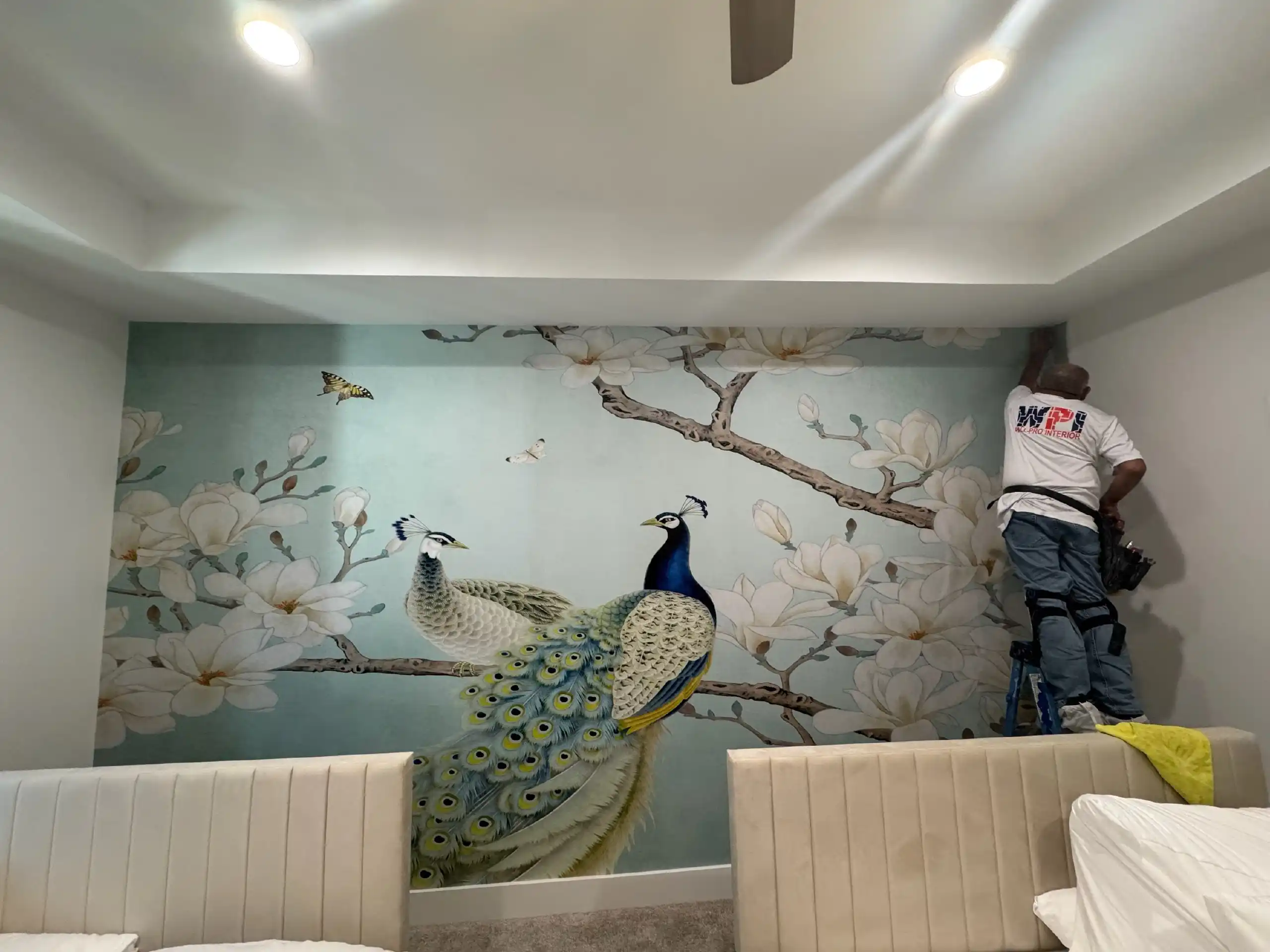
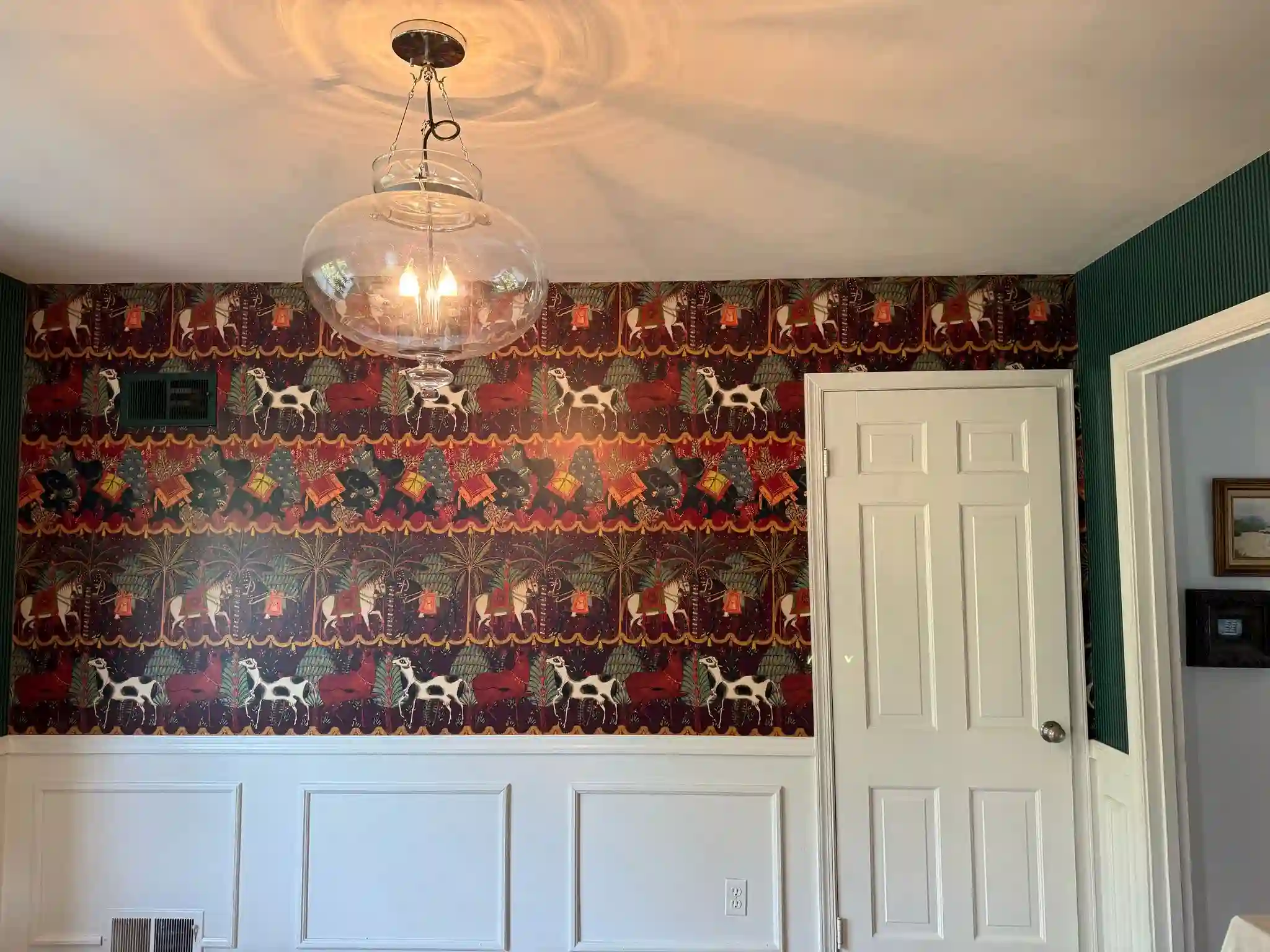
A wallpaper pattern may have a random, straight-across, or drop match. That tells you how the printed design aligns between adjacent strips. Allowance for a repeat can affect cutting and material quantity, especially when the design has a large repeat or must meet across several visible walls.
A first strip needs a true vertical reference. Starting in a corner that is out of plumb can make later seams drift. Windows, doors, inside corners, and changes in wall width affect how a repeat lands, so these transitions are considered during layout rather than treated as identical strips.
Finished seams should follow the product’s joining instructions. Depending on the wallpaper, that may mean edges meeting, a specified overlap, or another treatment. Applying too much pressure at a seam or stretching the paper while smoothing can affect the pattern or material. Trimming and cleanup should also suit the paper’s surface and care guidance.
At corners, openings, and edges, the pattern may need to be handled differently than on an uninterrupted wall. Those are useful details to bring up when talking through the room.
05 · Scope, not a made-up price
What can shape a wallpaper installation estimate?
There is no one price that fits every wall. Helpful factors to discuss include:
How many walls and how much surface area are involved.
The wall’s current condition, texture, and preparation needs.
Whether existing wallcovering needs removal.
The wallpaper type and its pattern repeat.
Corners, ceiling height, doorways, windows, and other transitions.
Whether a project is residential, commercial, or includes specialty material.
You do not need every measurement to make an initial call. If you know the product name, you can share it; if not, simply describe the idea.
Common questions
Wallpaper questions, answered
Does new paint need time to cure before wallpaper goes up?
Often, yes—but the recommended time depends on the paint and wallpaper product. A paint surface may feel dry while still curing. Follow the paint manufacturer’s and wallpaper maker’s directions before installation.
Will wallpaper cover an uneven wall?
Wallpaper is not a substitute for repairing a wall. Small irregularities may show, especially beneath smooth or light-colored papers. The surface and selected product should be considered together.
Can peel-and-stick wallpaper go over textured paint?
Some product makers do not recommend textured surfaces. Check the specific product’s instructions; compatibility should not be assumed just because the wallpaper is self-adhesive.
How much extra wallpaper should I order?
Pattern repeat, wall height, number of walls, and roll coverage all affect quantity. Follow the product seller’s roll calculator or ask the installer what information is needed to discuss the project.
Can you remove the old wallpaper and install new paper?
Wallpaper removal and new wallpaper installation are both available services. The wall beneath existing paper may need inspection and preparation before a new surface is chosen.
Have a product in mind?
Let’s talk about the wall it will meet.
Wallpaper installation is available in Westwood and throughout Bergen County, NJ.